🇫🇷

Best Water Filters for Residents in Southern France (2026 Guide)

French water treatment is excellent, but Mediterranean France has notably hard water and strong chlorination that most people prefer to filter.

💧 Water Quality Overview

France has some of the strictest water quality standards in the EU, and treatment is consistently excellent. However, the south of France — particularly Provence, Côte d'Azur, and Languedoc — has very hard water due to the limestone geology. Chlorine levels in southern regions are noticeable.

Key Water Quality Concerns

Provence & Côte d'Azur

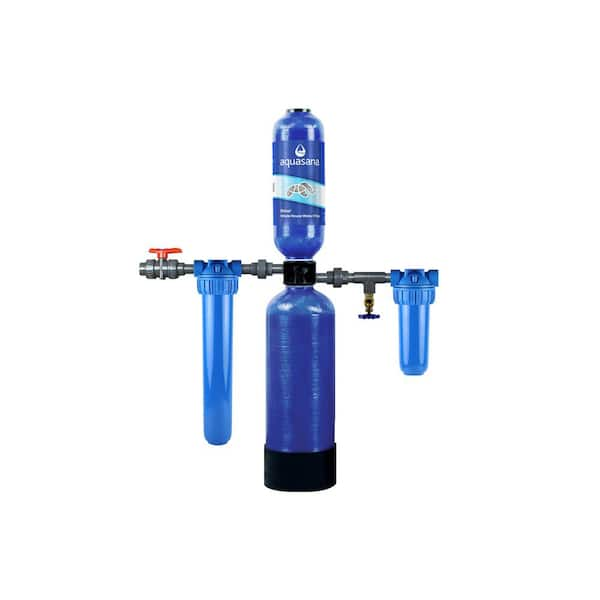
The French Riviera and Provence have hard water thanks to the limestone Alps and garrigues. Limescale is a constant issue. French water treatment is thorough but leaves noticeable chlorine. For villa owners, the Aquasana whole-house system is ideal. For apartments in Nice, Cannes, or Aix-en-Provence, an under-sink filter works well.

Languedoc-Roussillon

The Languedoc region has variable water quality depending on the source. Coastal areas near Montpellier and Perpignan use mixed sources including groundwater, which can be hard. Inland areas near the Cévennes have softer water. A versatile under-sink filter covers most needs.

Rural Properties

Local farmhouses (mas) in rural Provence often have older plumbing and may use well water. These properties should be tested for pesticide residues (common in vineyard areas) and bacteria. A whole-house system provides the most comprehensive protection.

French Water Quality Data

France publishes detailed water quality reports (ARS) for every commune. You can check your local water quality at sante.gouv.fr. Look for THM (trihalomethane) levels, hardness (dureté), and pesticide readings. This data helps you choose the right filter for your specific location.

Good news about water

Water Wins in Europe

Positive stories about rivers, restoration, and clean water across the Mediterranean and beyond.

Europe-wide Oct 2025

EU Adopts European Water Resilience Strategy

The Council of the EU officially adopted the European Water Resilience Strategy, committing to restore rivers, lakes, and wetlands and guaranteeing clean, affordable water for all Europeans by addressing pollution at the source.

wareg.org ↗
Croatia 2025

Croatia's First Dam Removals Reconnect Plitvice Rivers

Eight obsolete river barriers were removed at Plitvice Lakes National Park — the first dam removals in Croatia's history — reconnecting 7.6 km of river and restoring habitat for the endangered Danube trout.

damremoval.eu ↗
Italy Sep 2025

Italy's Liri River Flows Free After Dam Removal

A 30-metre dam on the Liri River was dismantled by Rewilding Apennines, freeing over 11 km of waterway. Thousands of juvenile Mediterranean trout were released to repopulate the restored river.

rewildingeurope.com ↗
Greece 2025

Greece Launches First Roadmap for River Restoration

MedINA published Greece's first practical roadmap for removing river barriers — a critical step that unlocks funding and policy support for dam removal across the Mediterranean region.

med-ina.org ↗
Spain Jun 2025

Spain Removes Europe's Biggest Obsolete Dam to Let the River Breathe Again

Authorities in Spain's Basque Country began breaking down a 43-metre-high dam on the Leitzaran River — one of the largest obsolete dams in Europe — letting the river flow freely for the first time in decades. The EU-backed LIFE Kantauribai project will reconnect fish habitats and restore the ecosystem.

euroweeklynews.com ↗
EU-wide May 2025

Record Number of River-Blocking Barriers Removed Across Europe

A landmark report found 23 countries removed river barriers in 2024 — up 11% year-on-year. Spain dismantled 96 dams, France 128, Finland 138, bringing the EU closer to its goal of 25,000km of free-flowing rivers by 2030.

theguardian.com ↗
EU-wide Jun–Dec 2025

EU Launches Historic Water Resilience Strategy with €15 Billion Investment

The European Commission adopted the European Water Resilience Strategy in June 2025, with the European Investment Bank pledging €15 billion (2025–2027) for water restoration. The strategy sets a path to clean, affordable water for all Europeans by 2050.

environment.ec.europa.eu ↗