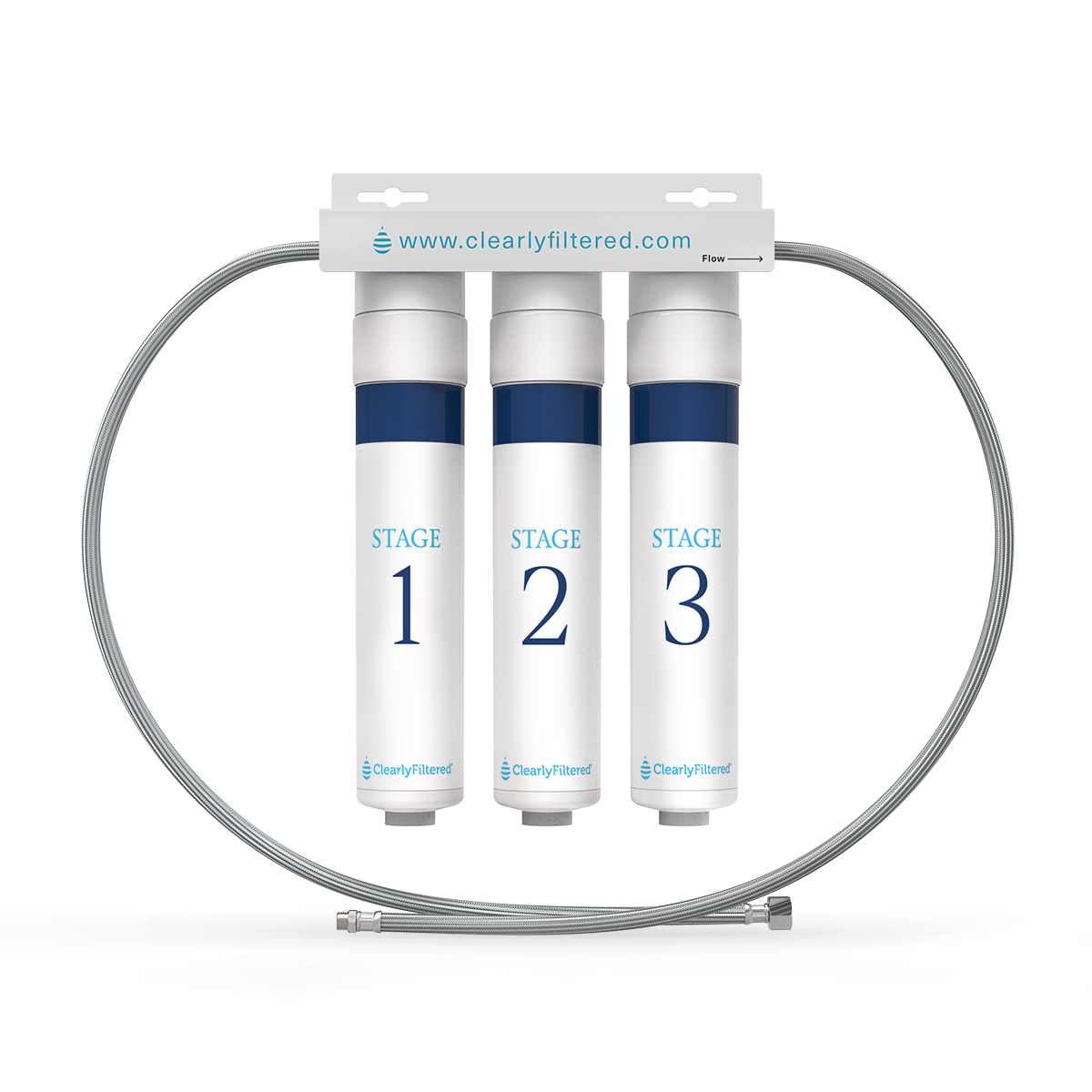
Under-sink and reverse osmosis systems represent the highest tier of residential water filtration. Where a pitcher filter reduces chlorine taste, an under-sink RO removes virtually everything dissolved or suspended in water — including contaminants that no other residential technology handles reliably at scale.
The contaminants that define this category
Lead, PFAS, fluoride, arsenic, and nitrates are the contaminants that pitcher filters and whole-house carbon systems cannot reliably remove at the percentages that matter. Reverse osmosis achieves 90–99%+ removal across all of them. For European households near industrial sites, agricultural regions, or with older lead pipes, an under-sink RO is the appropriate response.
Tankless vs. tank-based RO
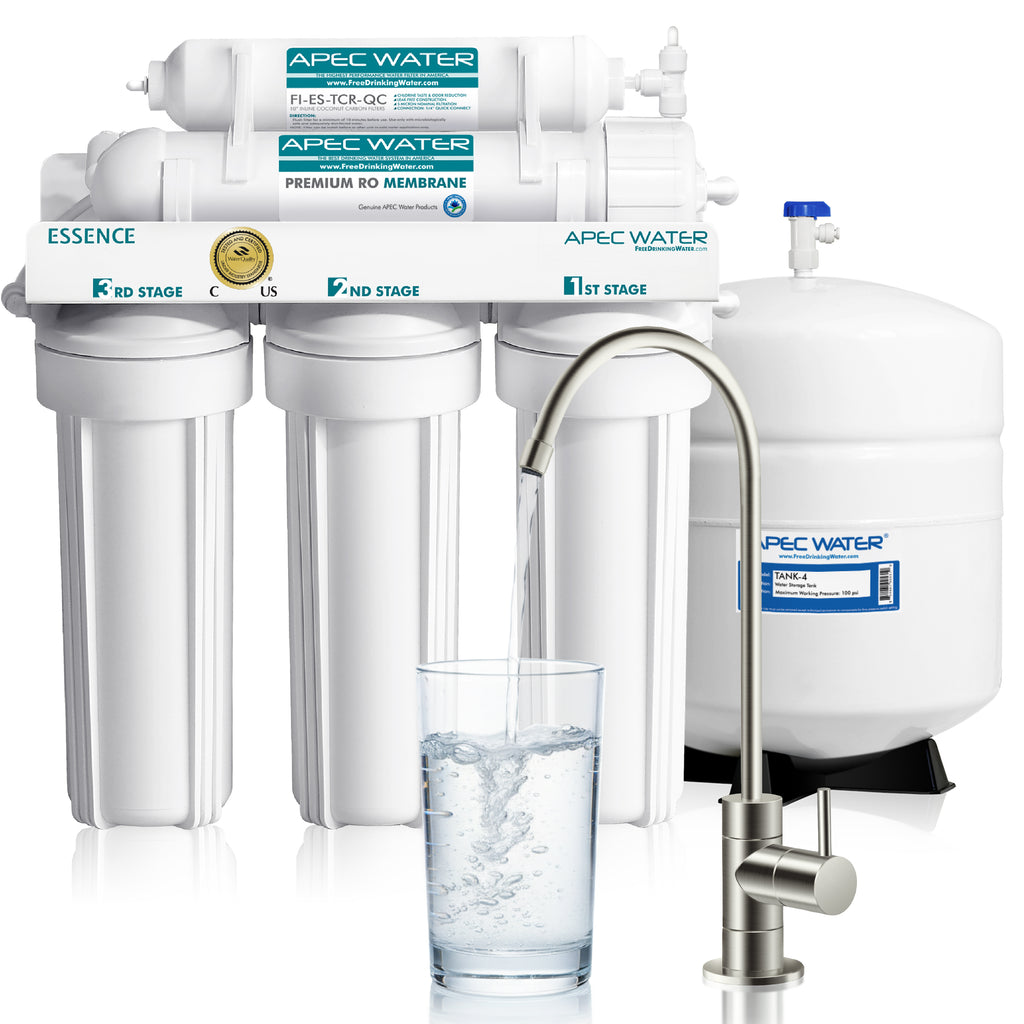
Traditional RO systems store filtered water in a pressurised tank (typically 10–15L). This means water is always available on demand but sits in storage — with quality slowly declining if unused for several days. Tankless systems like the Waterdrop G3P800 produce water on demand with a high-flow membrane, meaning no storage, always fresh output, but a brief wait for the first pour. For households that use filtered water every day, tankless is generally preferable.
Remineralisation worth considering
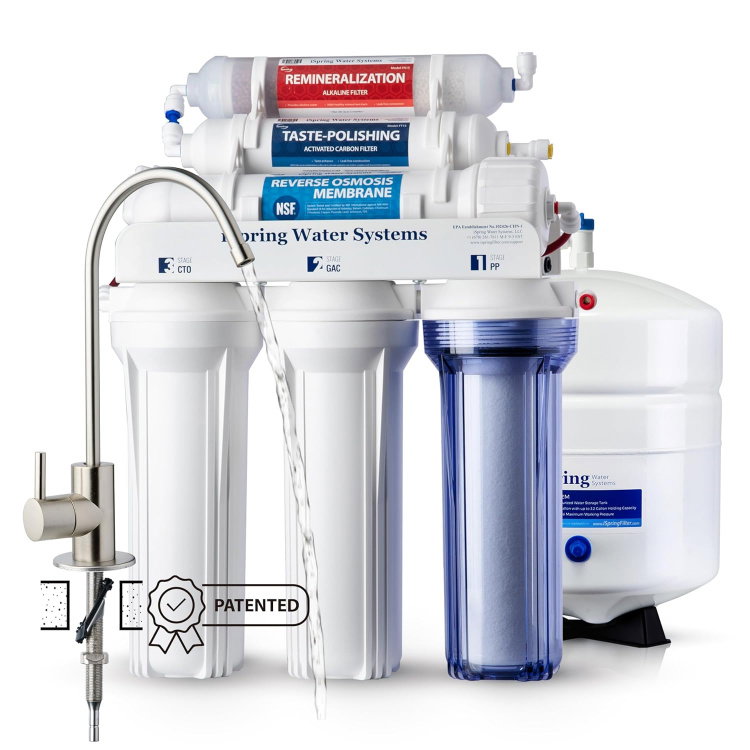
RO membranes remove virtually all dissolved solids — including calcium and magnesium. Systems with an alkaline remineralisation stage (like the iSpring RCC7AK) add these minerals back, raising output pH from the typically acidic 5.5–6.5 to a neutral 7.0–7.5. This improves taste and neutralises the flat, slightly sharp flavour some people notice in pure RO water.
Waste water: less of a problem than you think
Traditional RO membranes discharge 2–4 litres of drain water per litre of purified output. Modern high-efficiency membranes (Waterdrop G3P800) achieve 3:1 pure-to-drain ratios. For a family drinking 5L/day of filtered water with a 3:1 system, total drain discharge is about 1.7L/day — less than one toilet flush. The environmental impact is much smaller than assumed.