💧 Water Quality Overview
French tap water is regulated under the EU Drinking Water Directive (2020/2184), implemented nationally by the Ministère de la Santé. Quality monitoring is publicly available through the government's water quality portal (qualite-eau.gouv.fr). Compliance rates in French cities are high — France consistently meets EU standards. Regional variation is the key issue. Northern France and the Alps have naturally soft, low-mineral water with excellent taste. Paris receives treated surface water from the Seine and Marne that meets safety standards but carries a noticeable chlorine taste; older Haussmann-era buildings may have lead plumbing. Southern France — Provence, the Côte d'Azur (Nice, Cannes, Antibes), Languedoc (Montpellier, Nîmes), and Corsica — sits on limestone geology, producing hard water at 250–400 mg/L CaCO3. PFAS monitoring has intensified under the EU's January 2026 limits, with several French sites flagged for historical industrial contamination.
Key Water Quality Concerns
- Chlorine taste in Paris — municipal treatment of Seine and Marne surface water requires higher disinfectant doses; detectable by smell in cold water and very noticeable when heated (tea, coffee, cooking)
- Hard water in the south — Provence, the Côte d'Azur, Languedoc, and Corsica sit on limestone geology; tap water routinely reads 250–400 mg/L CaCO3, causing limescale on appliances and affecting the taste of hot drinks
- Lead from old pipes — buildings in Paris constructed before 1948 may retain lead service lines or internal galvanised plumbing; municipal treatment cannot correct this downstream; most affected in older arrondissements (10th, 11th, 18th, 19th, 20th)
- PFAS (forever chemicals) — EU Directive 2020/2184 introduced strict PFAS limits from January 2026; France has several active monitoring zones including sites near Lyon, near Toulouse (aerospace manufacturing), and in the industrial north (Nord-Pas-de-Calais)
- Agricultural nitrates — intensive farming in Brittany, the Loire Valley, Beauce plain, and southwest France has elevated nitrate levels in rural groundwater; urban municipal supply is generally within limits but private wells in these regions may exceed them
Is Tap Water Safe to Drink in France?
Yes — tap water in France is legally safe to drink and meets EU Drinking Water Directive (2020/2184) standards. The French government publishes water quality results publicly at qualite-eau.gouv.fr, searchable by postcode. In practical terms, French tap water is among the safest in the world. The question is not safety but quality and taste. Paris water has a pronounced chlorine taste that many residents find unpleasant, especially in summer when treatment doses increase. Southern France has hard limestone water that causes limescale damage to appliances and changes the taste of hot drinks. In both cases, a countertop filter solves the real problem. For Paris: activated carbon removes chlorine taste, but lead from old pipes requires a certified filter. For the south: a countertop reverse osmosis unit removes hardness, chlorine, lead, and PFAS in one step.
Paris Water Quality: Chlorine, Old Pipes, and PFAS
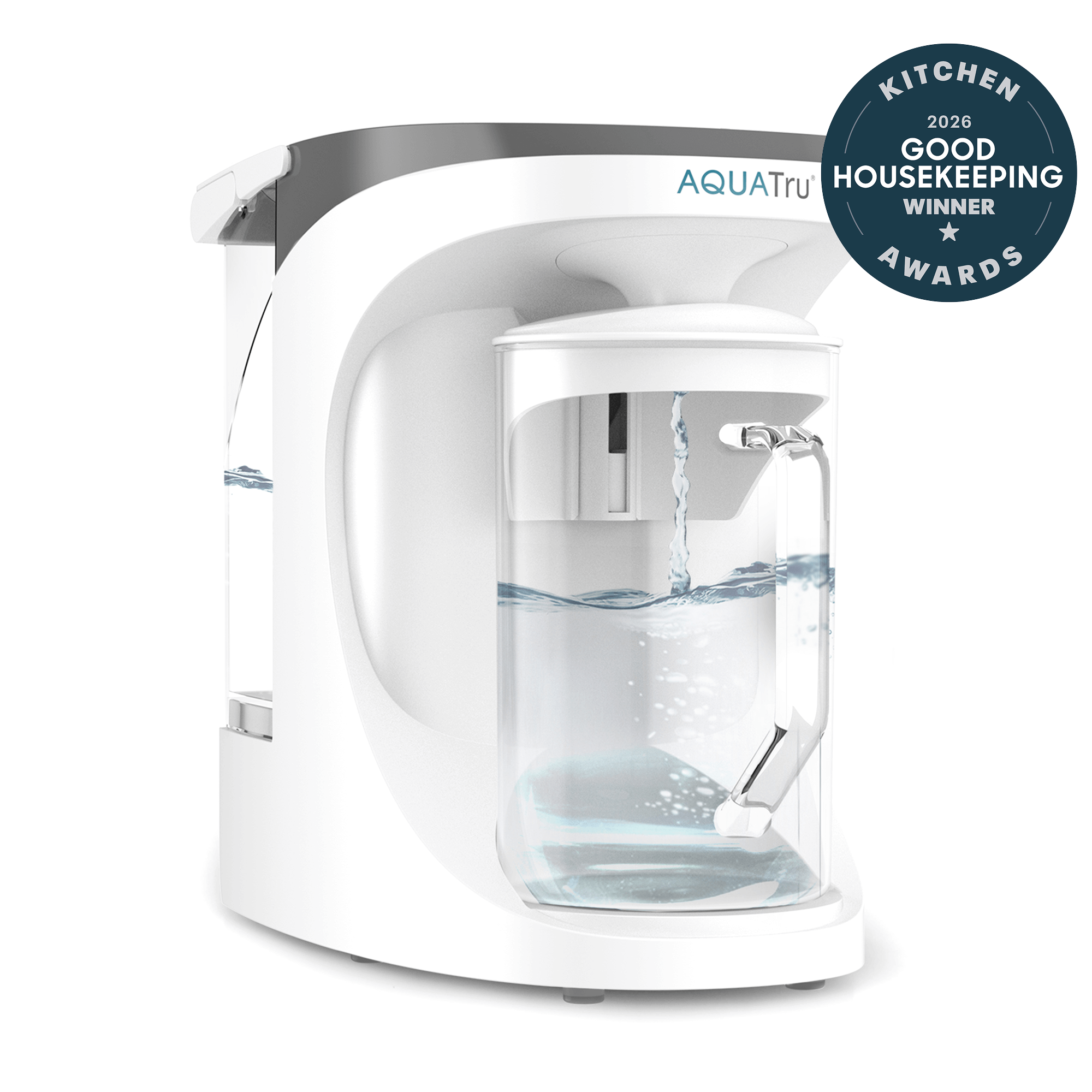
Paris water is supplied by Eau de Paris from surface sources (Seine, Marne, Vanne, and Avre rivers) plus groundwater. Treatment is thorough and regulatory compliance is consistent. The main complaint is chlorine taste — surface water requires significant disinfection, and the taste is detectable particularly when water sits in warm pipes during summer. Paris's building stock is the other issue: construction before 1948 (very common in central arrondissements) may include lead service lines or internal galvanised plumbing. Haussmann-era buildings throughout the 9th–11th arrondissements are a particular concern. Since 2013, Paris has actively replaced public lead pipes, but private building plumbing inside the property boundary remains the owner's responsibility. Eau de Paris publishes lead test results by arrondissement at eaudeparis.fr. PFAS monitoring has increased under the 2026 EU directive; Paris results are currently within new limits. The AquaTru Carafe and AquaTru Classic both remove chlorine, lead, and PFAS and are the correct tools for Paris households.
Southern France: Hard Water in Provence and the Côte d'Azur
Provence, the Côte d'Azur (Nice, Cannes, Antibes, Menton), the Var, and the Bouches-du-Rhône (Marseille, Aix-en-Provence) sit on extensive limestone geology. Source water dissolves calcium carbonate as it moves through the rock, arriving at treatment plants already hard. Municipal treatment addresses microbiological safety but does not soften water. Tap water in Marseille typically reads 280–350 mg/L CaCO3; Nice and the eastern Côte d'Azur often exceed 350 mg/L. At these levels, limescale buildup on taps, shower heads, and appliances is visible within months. The taste of coffee and tea is strongly affected — high calcium binds to tannins and changes the flavour. Standard pitcher filters (Brita, etc.) do not remove hardness minerals. Countertop reverse osmosis (AquaTru Classic or Carafe) is the correct solution for the south: it removes hardness, chlorine, and PFAS without requiring plumbing modifications.
Languedoc and Montpellier: Mediterranean Hard Water
Languedoc-Roussillon — Montpellier, Nîmes, Perpignan, Béziers, Sète — has water quality profiles similar to Provence. Much of the region draws on Rhône-fed infrastructure and local karstic (limestone) aquifers. Montpellier tap water typically measures 300–380 mg/L CaCO3 — firmly in the 'very hard' WHO classification. Nîmes and the Gard department have similar profiles. Agricultural pressure is higher in Languedoc than in Provence: the Hérault and Gard valleys have intensive viticulture, horticulture, and some cereal farming, with associated nitrate and pesticide monitoring in rural supply zones. Urban Montpellier municipal supply is consistently within EU limits, but taste and hardness remain the practical issues for daily use. The same countertop RO recommendation applies.
Lyon, Bordeaux, and the Rhône-Alps Region
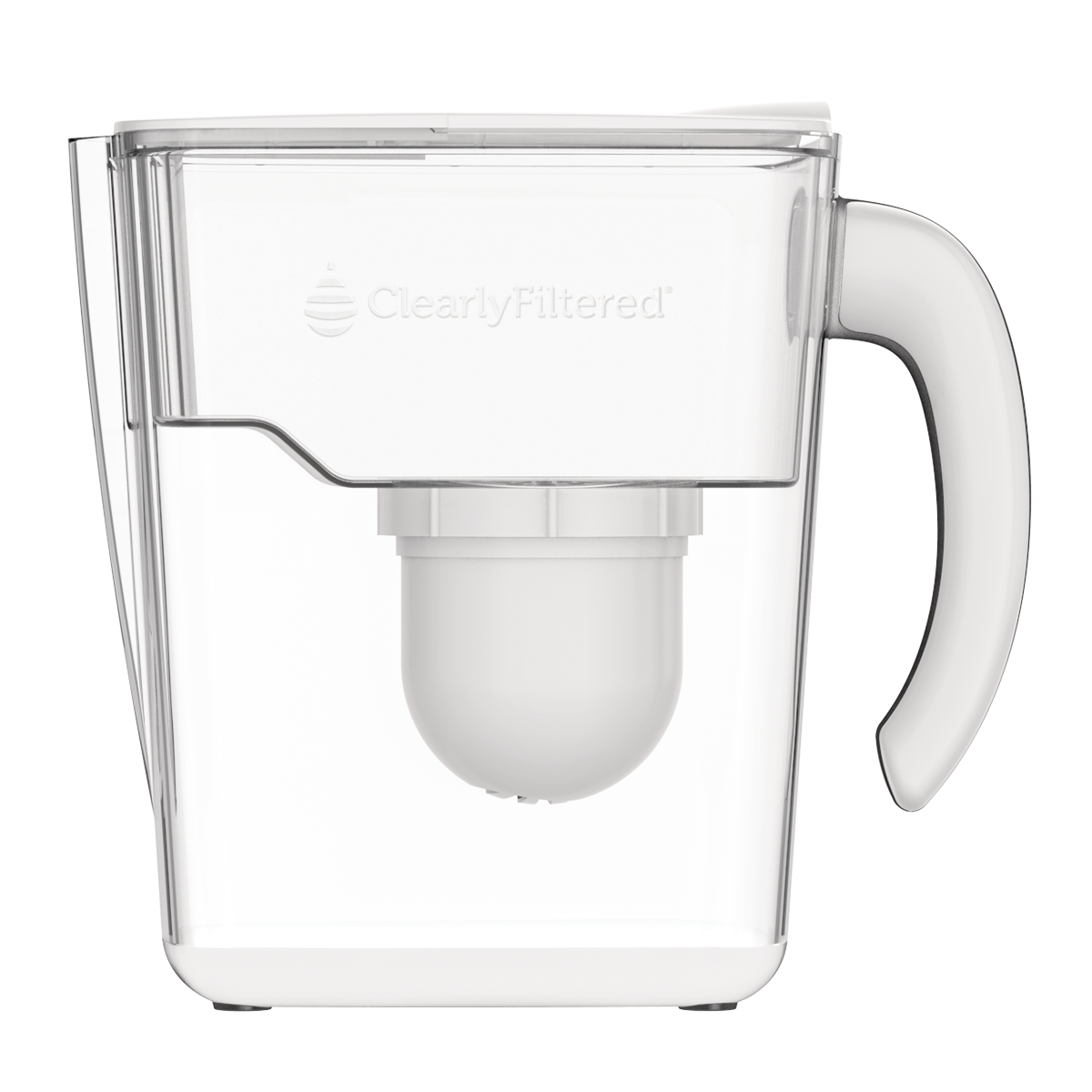
Lyon draws water from the Rhône and its Alpine tributaries — principally the Ain river and groundwater from the Dombes plateau. Source water is moderately soft by French standards, with hardness typically 150–220 mg/L CaCO3. Treatment is modern; Lyon's utility (Eau du Grand Lyon) has one of the more transparent reporting systems in France. PFAS monitoring is active near Lyon due to the Saint-Gobain industrial site at Salaise-sur-Sanne (south of Lyon), which was identified as a major PFAS source from perfluorooctanoic acid (PFOA) manufacturing. Drinking water near the Rhône corridor has been subject to active remediation and monitoring since 2021. Bordeaux draws on the Dordogne and Garonne — moderately soft water with low hardness; taste is generally well-regarded. For Lyon specifically, PFAS-certified filtration (AquaTru Classic, Clearly Filtered) is a practical measure while monitoring continues.
Corsica: Isolated Supply with Limestone Water
Corsica's water comes primarily from island springs and rivers — quality is generally good in terms of microbiological safety, and the island's isolation means lower industrial contamination risk than the mainland. However, significant parts of Corsica — particularly the south and east (Porto-Vecchio, Bonifacio, Bastia area) — have limestone geology producing moderately hard water, typically 200–320 mg/L CaCO3. Infrastructure quality varies more than on the mainland; some rural communes have ageing networks. For Corsica's towns and tourist areas, a countertop filter (AquaTru Carafe for hard water, Clearly Filtered for chlorine/taste) is a practical choice, particularly for anyone renting or living in older property.
PFAS in France: EU Directive and Active Monitoring Zones
France has several active PFAS monitoring zones following the EU Drinking Water Directive's January 2026 limits (0.10 µg/L total PFAS, 0.02 µg/L for PFOA/PFOS). Identified hotspots include: the Rhône corridor south of Lyon (Saint-Gobain PFOA manufacturing legacy); sites near Toulouse linked to aerospace and defence manufacturing; industrial zones in Nord-Pas-de-Calais; and areas near military airports where AFFF (aqueous film-forming foam) was used. The French agency ANSES has been publishing updated monitoring data as utilities bring testing into compliance with the new directive. For most French cities, PFAS in drinking water is currently within new EU limits — but for households in or near the Rhône corridor, Lyon east suburbs, or industrial zones in the north, a PFAS-certified filter is a practical precaution. Both the AquaTru Classic and Clearly Filtered Pitcher have NSF 58 and NSF 53 certifications covering PFAS reduction.
Where to Buy Water Filters in France
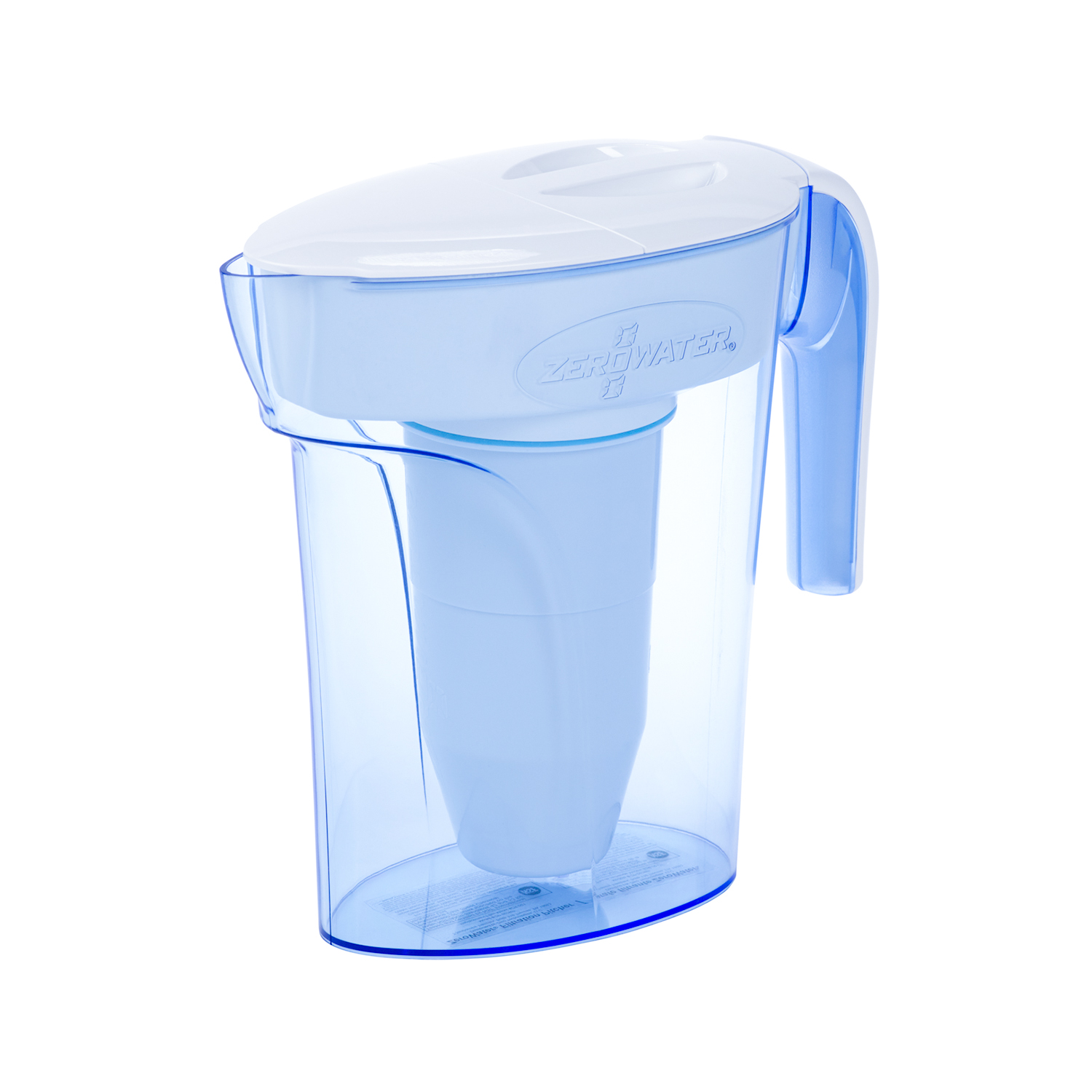
Amazon.fr carries the AquaTru Classic, AquaTru Carafe, and Clearly Filtered Pitcher with delivery across metropolitan France in 2–5 days. ZeroWater is available through Amazon.fr and Fnac. TAPP Water (tappwater.com) ships to France and has France-specific product recommendations; their EcoPro Twist is a tap-mounted option good for chlorine and taste improvement, though it does not remove hardness minerals. Berkey has French distributors — search 'Berkey France' for current authorized resellers. Fnac and Darty carry Brita and Laica pitcher filters in-store; these address chlorine and taste but do not remove hardness minerals or PFAS. For southern France residents dealing with hard water, pitcher filters are a partial solution at best — countertop RO (AquaTru) is the correct category. EU-standard plugs (Type E, 230V) are included with all units shipped to France.
Water Quality in Other Countries
Every Mediterranean country has different water challenges. Explore our other guides to compare water quality across the region.