Private well water is not monitored by any regulatory body. You are responsible for knowing what's in it — and addressing it. The contamination profile of well water is fundamentally different from municipal water, and requires a different approach to filtration.
Step 1: Test your well
Before buying any filter, test your well water. Basic tests (€30–80) cover bacteria, nitrates, pH, hardness, and iron. Comprehensive tests (€100–200) add heavy metals, PFAS, pesticides, and volatile organics. Without a test, you're guessing. Well water contamination varies enormously by geology, agricultural activity, and proximity to septic systems. What works in the Alentejo may be wrong for rural Catalonia.
Bacteria and E. coli: The primary well water risk
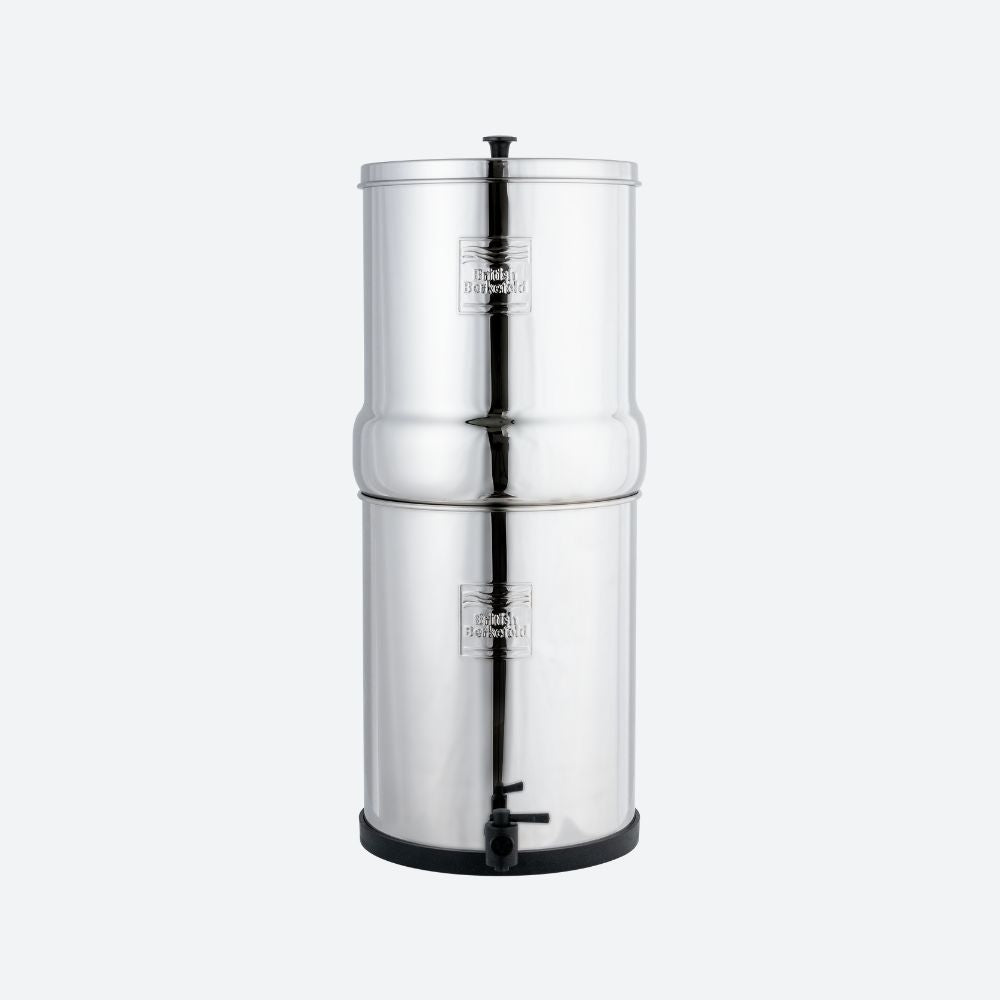
Groundwater contamination by coliform bacteria and E. coli is the most critical well water risk, particularly near agricultural land, livestock operations, or failing septic systems. Gravity filters with ceramic elements (Berkey, British Berkefeld) remove 99.9999% of bacteria and 99.999% of viruses. UV purifiers kill pathogens but don't filter sediment or chemicals — they're best combined with a pre-filter. RO systems effectively eliminate biological contamination via physical membrane rejection.
Iron and Manganese: The most common aesthetic problem
Iron in well water causes orange/red staining on fixtures, a metallic taste, and clogged filters. Manganese causes black staining and is a potential neurotoxin at high levels. Standard activated carbon filters don't remove dissolved iron. You need oxidation + filtration (iron filter), ion exchange, or RO. For whole-house iron removal, a dedicated iron filter before your pressure tank is the right solution. For drinking water at the tap, a countertop RO like the AquaTru handles dissolved iron effectively.
Nitrates: A serious risk for infants
Nitrates in well water — typically from agricultural fertilizers, septic systems, or natural geology — are particularly dangerous for infants under 6 months (methemoglobinemia, or "blue baby syndrome"). Standard carbon filters don't remove nitrates. You need reverse osmosis or ion exchange specifically rated for nitrate removal. If your well tests above 25 mg/L NO3, do not give that water to infants unfiltered.
Building a well water treatment system
- Whole-house sediment pre-filter (5 micron): Protects downstream filters and appliances from sand and silt.
- Point-of-use bacteria/virus filter: Berkey gravity filter or UV purifier for drinking water.
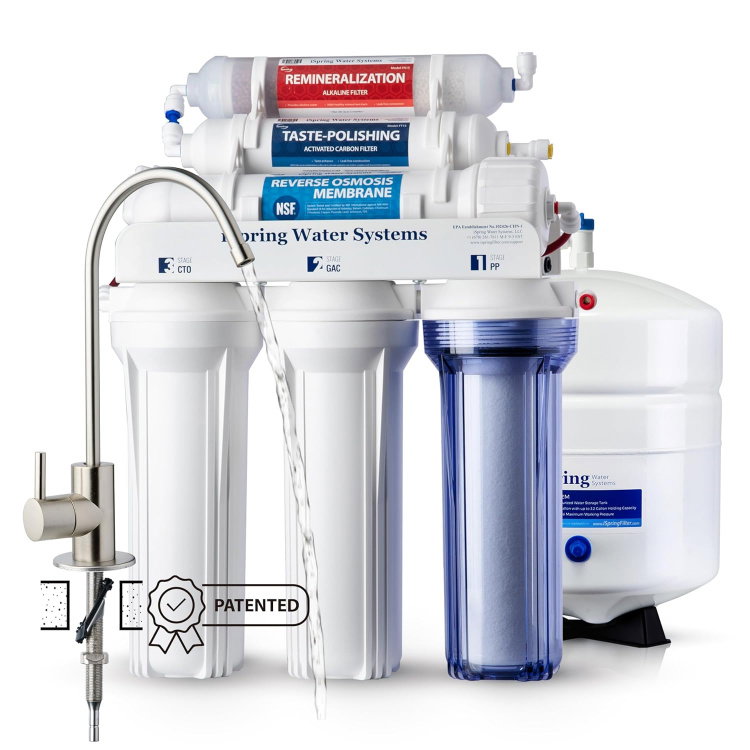
- RO system (under-sink or countertop): Addresses nitrates, PFAS, dissolved metals, hardness for drinking and cooking water.
- Iron removal (if iron >0.3 mg/L): Requires a whole-house iron filter — pitcher and counter filters typically can't handle high iron loads without clogging.
Well water treatment often requires multiple stages. A single pitcher filter is not a complete solution for most well water situations.