💧 Water Quality Overview
Greek tap water is regulated under the EU Drinking Water Directive (2020/2184), implemented by EYDAP (Athens Water and Sewerage Company) on the mainland and by local utilities across the islands. Mainland compliance rates are consistently within EU limits — Athens draws from the Mornos and Evinos reservoirs in central Greece, with water quality reports published by EYDAP and the Ministry of Health. The practical issues are: a moderate chlorine taste in Athens, hard limestone water in many mainland regions (200–350 mg/L CaCO3), and aging pipe infrastructure in pre-1980 buildings. The Greek islands are a separate situation. Smaller islands in the Cyclades (Santorini, Mykonos, Paros, Naxos) rely heavily on desalination plants for fresh water, with some islands supplementing supply via tanker deliveries during peak tourist season. Desalinated water is safe but can have unusual mineral profiles and a flat, metallic taste. Crete has its own reservoir system; water is generally good quality but harder in the south. Rhodes and the Dodecanese have moderately hard water with some aging pipe infrastructure. Corfu and the Ionian Islands have Greece's softest and most reliably clean tap water. For tourists and expats, locals across the islands commonly recommend bottled water — not because of serious safety concerns, but because of taste and the variable nature of island supply infrastructure.
Key Water Quality Concerns
- Hard water across the mainland — Athens and much of central and southern Greece sit on limestone geology; tap water typically reads 200–350 mg/L CaCO3 in Athens and can exceed this in drier southern regions; limescale buildup on taps and appliances is common
- Island water supply limitations — the Cyclades and many smaller Aegean islands rely on desalination plants or tanker deliveries; water is safe but can taste flat or metallic; supply pressure and quality can vary by season, especially during peak summer tourism
- Chlorine taste in urban supply — Athens and Thessaloniki municipal systems add disinfectant chlorine; taste is detectable especially in warm weather and from hot taps; standard activated carbon filters resolve this
- Lead from old pipes — buildings in Athens and Thessaloniki constructed before 1980 may retain lead internal plumbing; municipal treatment cannot address this downstream; concentrated in older central neighbourhoods of both cities
- EU PFAS monitoring — the EU Drinking Water Directive 2020/2184 introduced strict PFAS limits from January 2026; Greece is in the active compliance rollout phase, with industrial zones around Thessaloniki and parts of Attica subject to expanded monitoring
Is Tap Water Safe to Drink in Greece?
Yes on the mainland — tap water in Athens, Thessaloniki, and most major Greek cities is legally safe and meets EU Drinking Water Directive (2020/2184) standards. EYDAP publishes Athens water quality results at eydap.gr; compliance is consistent. The practical issues are taste and hardness: Athens water has a noticeable chlorine taste and moderate-to-high hardness (200–350 mg/L CaCO3) from limestone geology. For the Greek islands, the answer is more nuanced. On larger islands with reservoir infrastructure — Crete, Corfu, Lesbos — tap water is safe and broadly comparable to the mainland. On smaller Cyclades islands (Santorini, Mykonos, Paros, Ios), where supply depends on desalination or tanker deliveries, the water is technically safe but variable in taste and mineral profile. Locals and guesthouses commonly serve bottled water as standard. A countertop filter solves the practical problems everywhere: it removes chlorine taste, reduces hardness minerals, filters lead from old pipes, and addresses PFAS — all in one unit.
Athens and Attica: Chlorine, Limestone, and Ageing Pipes
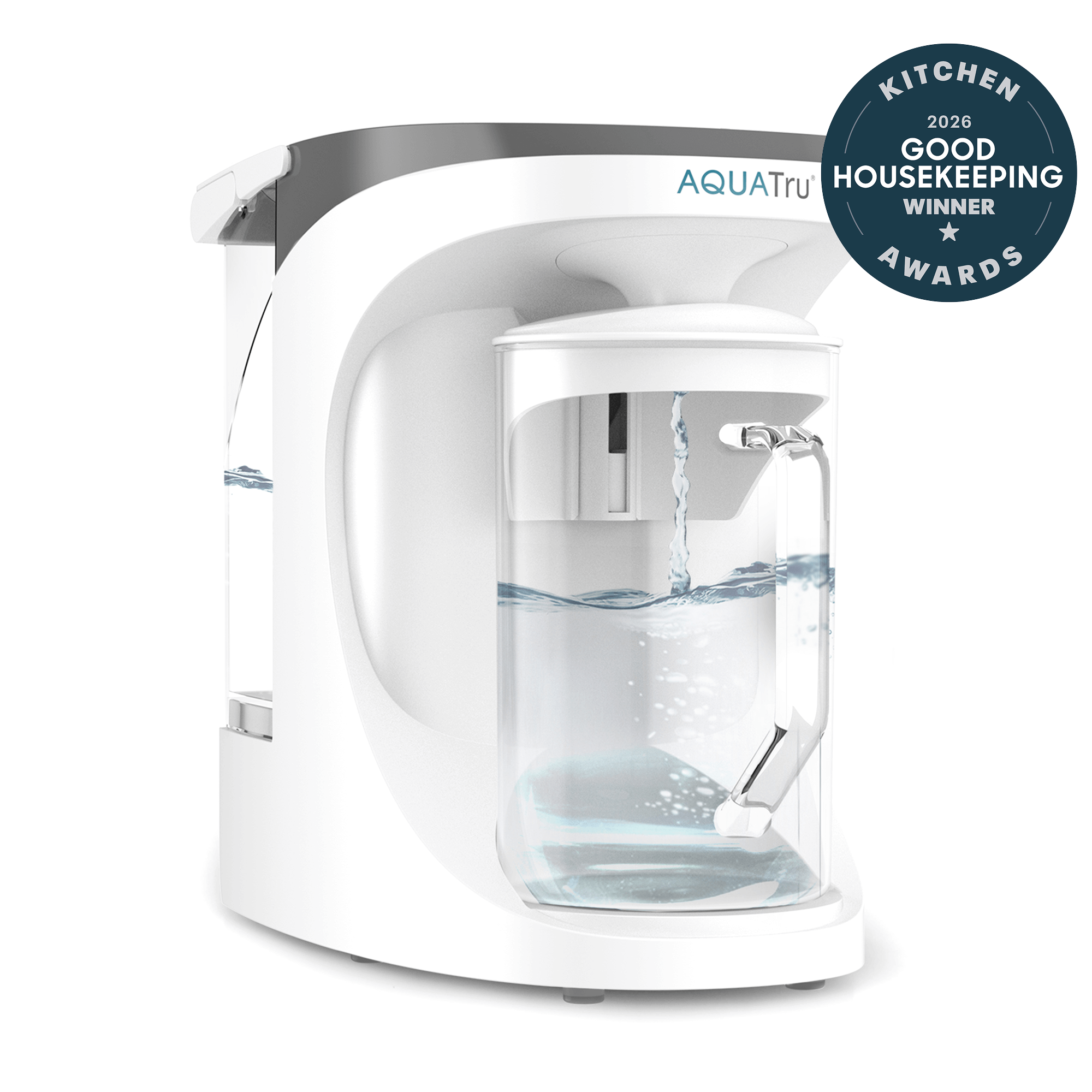
Athens is supplied by EYDAP from three main reservoirs: Mornos (central Greece), Evinos (western Greece), and Yliki (Boeotia). Source water travels significant distances through mountain pipelines, arriving in good condition. Treatment is modern and reliable; EYDAP's compliance record is strong. The complaints are practical: chlorine taste — Athens uses chlorine disinfection and the taste is detectable, particularly in summer when warmer pipes increase off-gassing. Hard water — Athens tap water typically reads 200–280 mg/L CaCO3 depending on neighbourhood and source mix; not as extreme as Spain or southern France, but enough for visible limescale on appliances and impact on coffee and tea quality. Old pipes in central Athens are the third issue: the city's pre-1980 building stock is substantial, and internal building plumbing in the Exarcheia, Omonia, Kolonaki, and Piraeus areas may include lead service lines. EYDAP manages public pipe replacement but private building plumbing is the owner's responsibility. A reverse osmosis countertop filter (AquaTru Classic or Carafe) resolves all three issues: chlorine removal, hardness reduction, and lead filtration. For renters or travellers, the AquaTru Carafe is portable and requires no installation.
Thessaloniki and Northern Greece
Thessaloniki draws water from the Aliakmon river and associated reservoirs in northern Greece — one of the country's larger and more modern water treatment systems. EYATH (the Thessaloniki water utility) publishes quality reports; compliance with EU parameters is consistent. Hardness is moderate — typically 150–220 mg/L CaCO3, softer than Athens. Chlorine taste is present but generally less pronounced than in the capital. The key concern in Thessaloniki is the PFAS monitoring picture: industrial activity around the Thessaloniki industrial zone and in parts of the Axios river basin has led to expanded PFAS testing under the EU's 2026 directive. Current results in Thessaloniki's municipal supply are within EU limits, but the monitoring is ongoing. In rural northern Greece — Macedonian agricultural plains, Thessaly, the Axios and Vardar river valleys — nitrate levels in rural well water warrant attention; intensive agriculture (cereals, cotton) has elevated nitrates in some groundwater zones. Urban municipal supply is within EU limits.
Greek Islands: Cyclades, Santorini, and Mykonos
The Cyclades represent the most acute water quality challenge in Greece. Islands including Santorini (Thira), Mykonos, Paros, Naxos, Milos, Ios, and Syros have very limited freshwater aquifers — volcanic geology on Santorini, and karstic limestone elsewhere, provides minimal natural groundwater storage. Most Cyclades islands operate municipal desalination plants (reverse osmosis or multi-stage flash); some supplement with tanker water deliveries from the mainland during peak tourist season (July–August). Desalinated water is microbiologically safe, but the mineral profile is unusual: very low total dissolved solids (TDS) from RO plants, with remineralisation varying by utility. Taste can be flat or slightly metallic. Water pressure and supply continuity can fluctuate during peak season when island populations multiply several times over. Locally, guesthouses and restaurants routinely provide bottled water and carafes; locals use it for cooking and drinking. For longer stays on the islands, a countertop filter (AquaTru Carafe works without installation) provides consistent quality regardless of what the utility is delivering.
Crete: Limestone Water and Reliable Infrastructure
Crete has Greece's most developed island water infrastructure — the island is large enough to support multiple reservoir systems (Aposelemis, Bramiana, and others) supplemented by springs and wells. Water quality is generally good, with lower reliance on desalination than the smaller Cyclades. The practical issue on Crete is hardness: the island's geology is predominantly limestone and dolomite, particularly in the south and west (Heraklion, Rethymno, western Chania). Tap water in Heraklion typically reads 250–350 mg/L CaCO3 — firmly in the 'hard' to 'very hard' WHO classification. Eastern Crete (Agios Nikolaos, Sitia) has similar profiles. Northern coastal areas around Chania benefit from slightly softer alpine-sourced supply but hardness remains elevated by European standards. Limescale on appliances and altered coffee/tea flavour are the main practical complaints. Chlorine is used in treatment; taste is detectable. A countertop RO filter (AquaTru Classic) is the correct solution for permanent residents in Heraklion or Rethymno dealing with hard water.
Rhodes, Dodecanese, and the Aegean Islands
Rhodes has its own water utility (DEYAR) drawing from underground sources and some surface water in the north of the island. Hard water is the consistent issue — Rhodes sits on limestone geology and tap water is typically 280–350 mg/L CaCO3, with limescale visible on taps and shower heads throughout the island. Infrastructure in the city of Rhodes and tourist resort areas is maintained, but rural areas and smaller Dodecanese islands (Kos, Leros, Kalymnos, Patmos) have more variable pipe quality. Kos has its own supply system; hardness is similar to Rhodes. Very small Dodecanese islands have the same desalination dependency as the smaller Cyclades. For Lesbos, Chios, and Samos in the eastern Aegean — larger islands with better-developed infrastructure — water quality is broadly comparable to mainland standards. Hardness is moderate (150–250 mg/L CaCO3 depending on local geology). All eastern Aegean islands are in active EU PFAS monitoring compliance rollout.
Corfu and the Ionian Islands
The Ionian Islands — Corfu (Kerkyra), Kefalonia, Zakynthos, Lefkada, Ithaca — have Greece's best island tap water. The Ionian sits in a wetter, greener climate zone than the Aegean; islands have adequate rainfall and spring-fed aquifers with lower desalination dependency. Corfu's geology produces naturally softer water than the mainland and the Cyclades — tap water hardness typically reads 80–150 mg/L CaCO3, classified as 'soft' to 'moderately hard.' DEYAK (Corfu's water utility) draws from mountain springs and groundwater; compliance with EU standards is consistent. Chlorine is still used in treatment but at lower doses than Athens. For Ionian island residents, a quality pitcher filter or under-sink activated carbon unit is typically sufficient — a full countertop RO system is optional rather than essential, unlike the Cyclades or mainland Athens where hard water demands it.
PFAS in Greece: EU Directive and 2026 Compliance
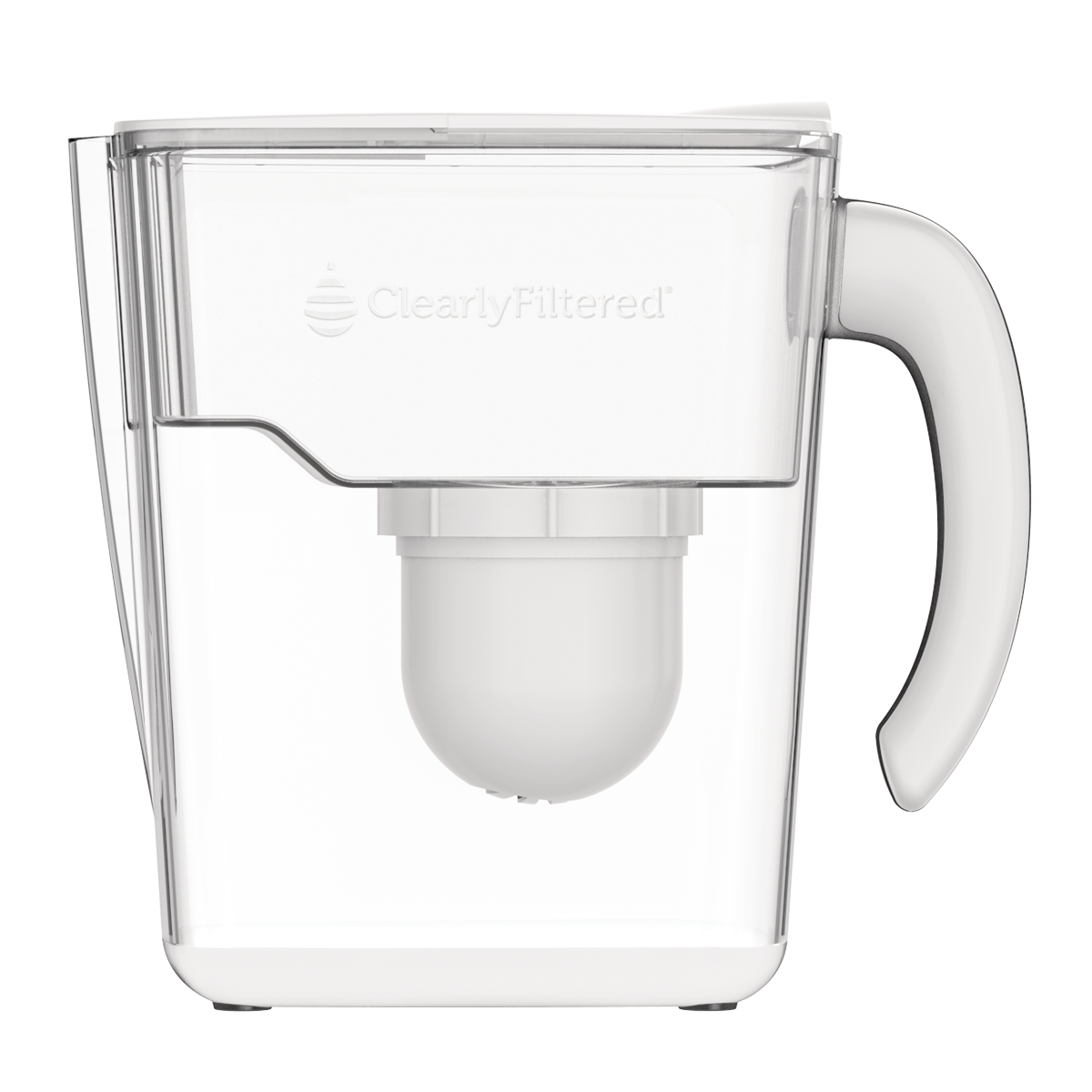
Greece is in the active implementation phase of the EU Drinking Water Directive (2020/2184), which introduced strict PFAS limits from January 2026: 0.10 µg/L total PFAS, and 0.02 µg/L for the most hazardous compounds (PFOA, PFOS, PFNA, PFHxS, PFDA, and HFPO-DA). The Greek Ministry of Health and regional utilities are expanding PFAS monitoring networks. Areas of elevated attention include: the Thessaloniki industrial zone and Axios river basin; parts of the Attica industrial hinterland (Elefsina, Aspropyrgos, Perama — areas with historically significant petrochemical and chemical manufacturing); and military airport sites where AFFF (aqueous film-forming foam) was used. For Athens and Thessaloniki city residents, current PFAS results in the municipal supply are within new EU limits. For households in or near identified industrial zones, a PFAS-certified filter is a practical precaution. Both the AquaTru Classic (NSF 58 certified) and the Clearly Filtered Pitcher (NSF 53, NSF 58, NSF 401 certified) remove PFAS effectively.
Where to Buy Water Filters in Greece
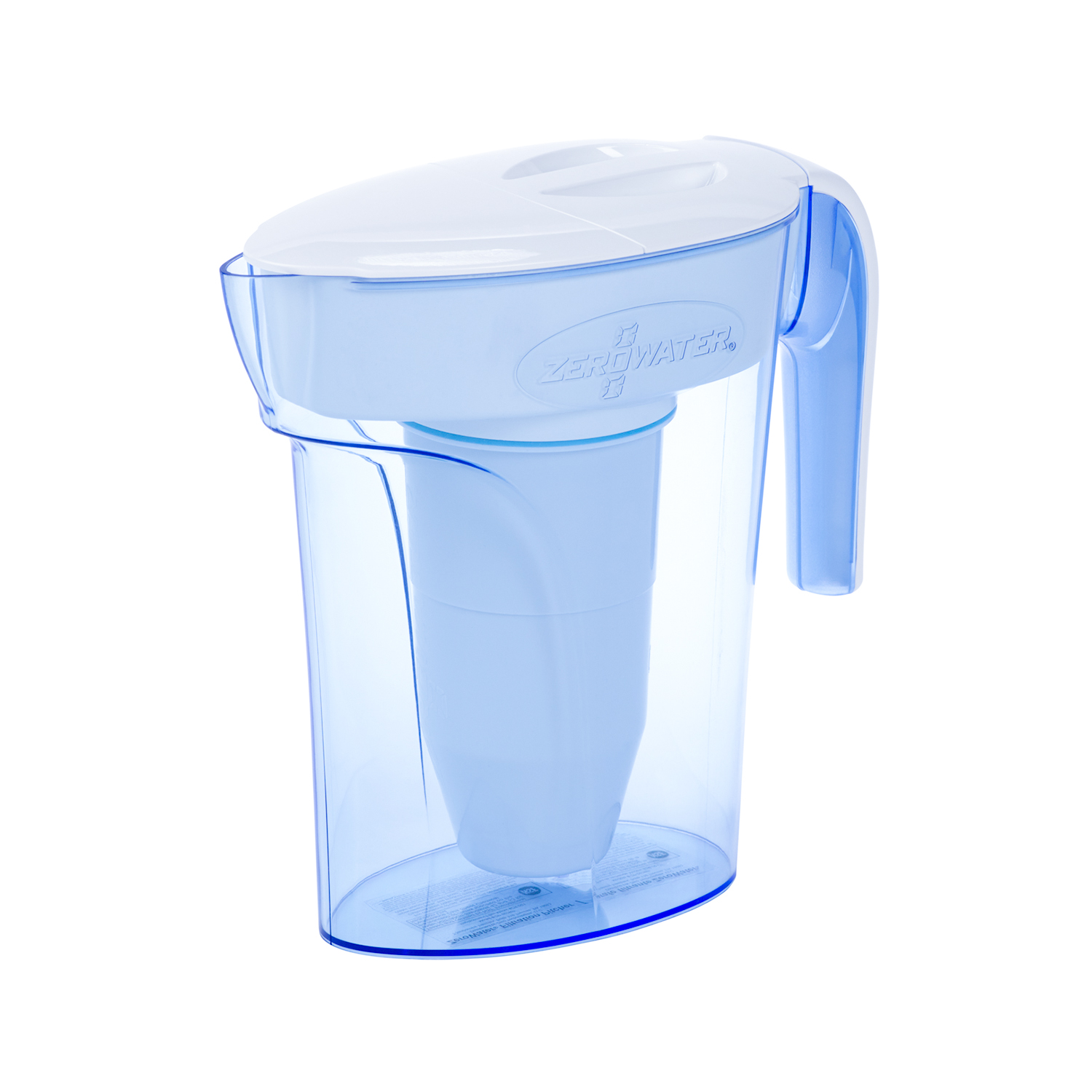
Amazon.co.uk and Amazon.de both deliver to Greece (5–10 business days) and carry the AquaTru Classic, AquaTru Carafe, Clearly Filtered Pitcher, and ZeroWater pitchers. Shipping costs are typically €10–€20 for Greece from either Amazon marketplace. Local Greek retailers: Public (public.gr), Plaisio (plaisio.gr), and MediaMarkt Greece carry Brita and a limited selection of water quality products in-store and online — generally pitcher filters and tap-mounted units. For countertop reverse osmosis (AquaTru, TAPP Water), ordering directly from the manufacturer's EU store or via Amazon EU is the most reliable option with EU-standard power plugs (Type F Schuko, 230V) included. For island residents or tourists on extended stays, the AquaTru Carafe is particularly practical: it uses no electricity, requires no installation, fits in a rental kitchen, and operates on the same reverse osmosis technology as the Classic model.
Water Quality in Other Countries
Every Mediterranean country has different water challenges. Explore our other guides to compare water quality across the region.